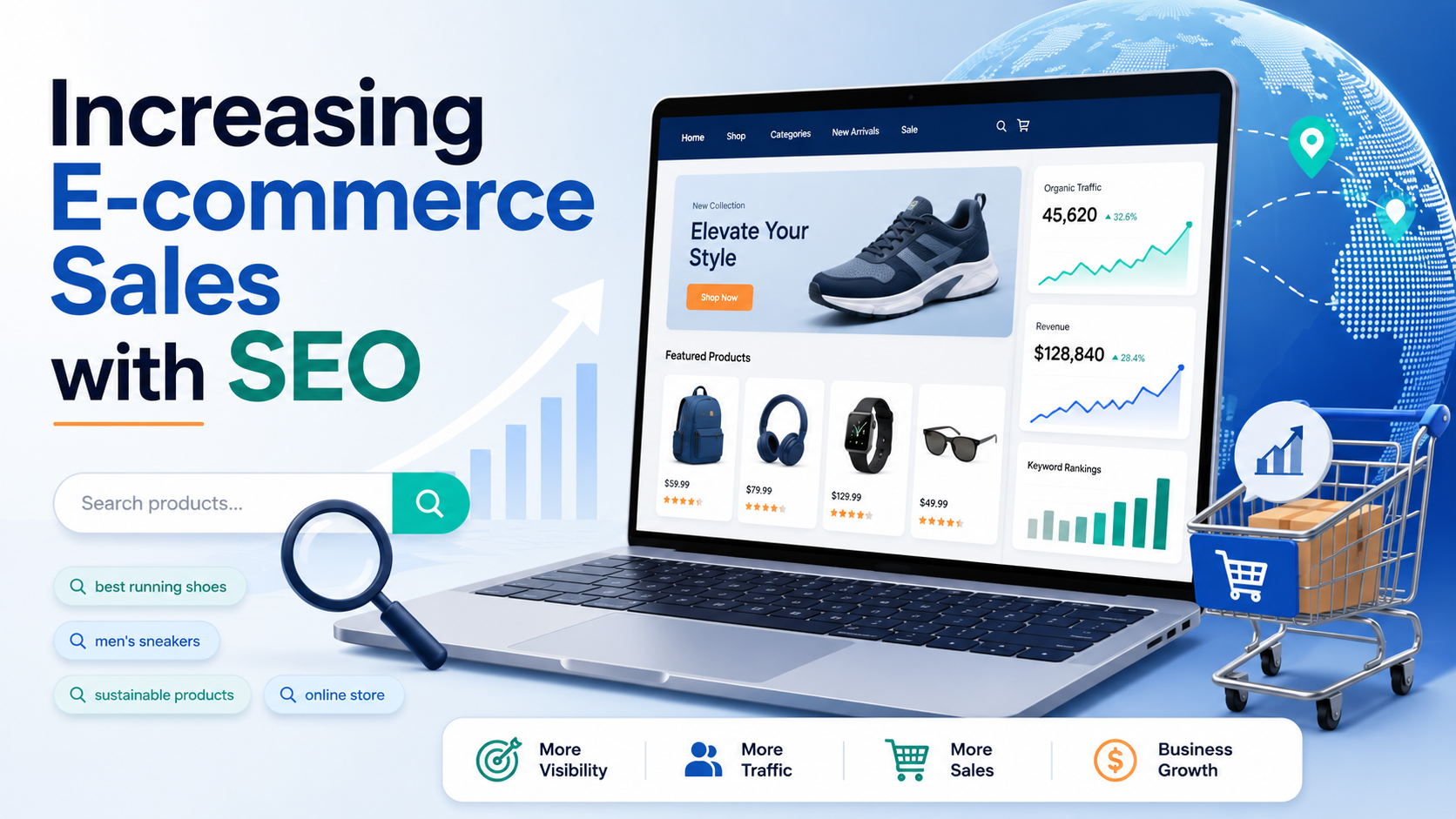
E-commerce SEO can increase online sales by helping your products and category pages appear when potential customers are actively searching for what you sell. The strongest strategy combines keyword research, product and category optimization, technical SEO, helpful content, structured data, internal linking, and conversion focused improvements.
Whether you operate a Shopify store, WooCommerce website, marketplace, direct to consumer brand, or large international online shop, SEO can create a sustainable source of qualified organic traffic without requiring you to pay for every click.
Google recommends making ecommerce websites easy to crawl and understand while providing accurate product information through relevant structured data and, where appropriate, Google Merchant Center.
If you want professional support implementing these strategies, explore our ecommerce SEO services.
What Is E-commerce SEO?
E-commerce SEO is the process of improving an online store so its products, categories, collections, brands, and informational pages can gain greater visibility in organic search results.
A complete ecommerce SEO strategy normally includes:
- Keyword research
- Product page optimization
- Category page optimization
- Technical SEO
- Site architecture
- Internal linking
- Product structured data
- Content marketing
- Image optimization
- Page experience
- Merchant Center optimization
- Backlink acquisition
- Conversion focused improvements
- International SEO where required
Google explains that SEO helps search engines crawl, index, and understand website content more effectively.
For ecommerce websites, the challenge is often greater because a store may contain hundreds, thousands, or even millions of product, category, filter, and variant URLs.
How Does SEO Increase E-commerce Sales?
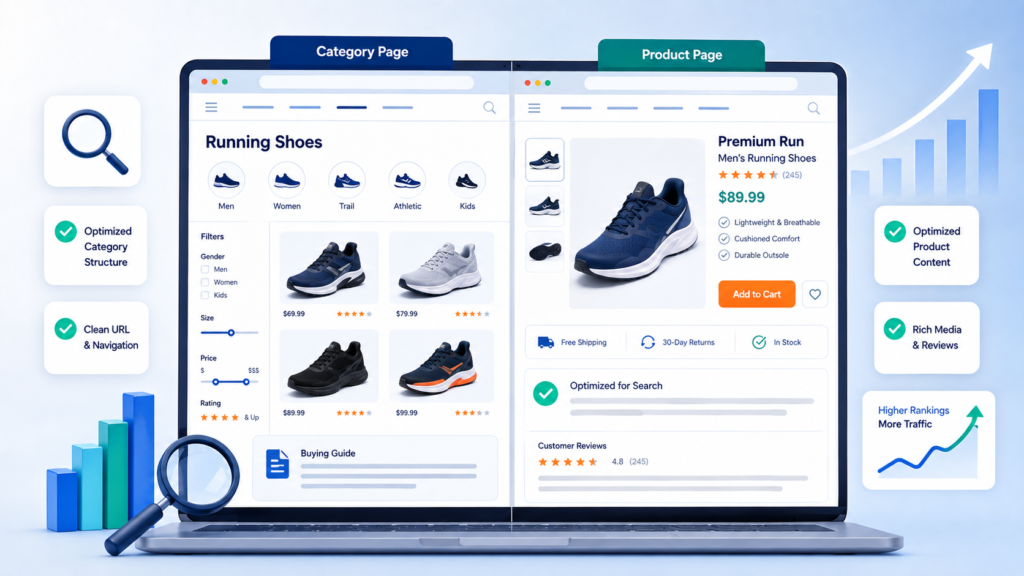
SEO increases ecommerce sales by connecting customer searches with the pages most likely to satisfy those searches.
Consider two visitors:
- “best running shoes for beginners”
- “buy men’s waterproof running shoes size 10”
Both visitors matter, but their intent is different.
The first may need a buying guide, while the second is ready to purchase.
Successful ecommerce SEO builds visibility throughout the entire buying journey.
SEO Can Increase Sales Through:
- Greater product visibility
- More qualified organic traffic
- Better category rankings
- Improved product discovery
- Stronger brand visibility
- More effective internal navigation
- Better user experience
- Increased trust
- More returning customers
- Reduced dependence on paid advertising
The objective is not just traffic, but:
Relevant traffic → product discovery → engagement → conversion → revenue
Start With E-commerce Keyword Research
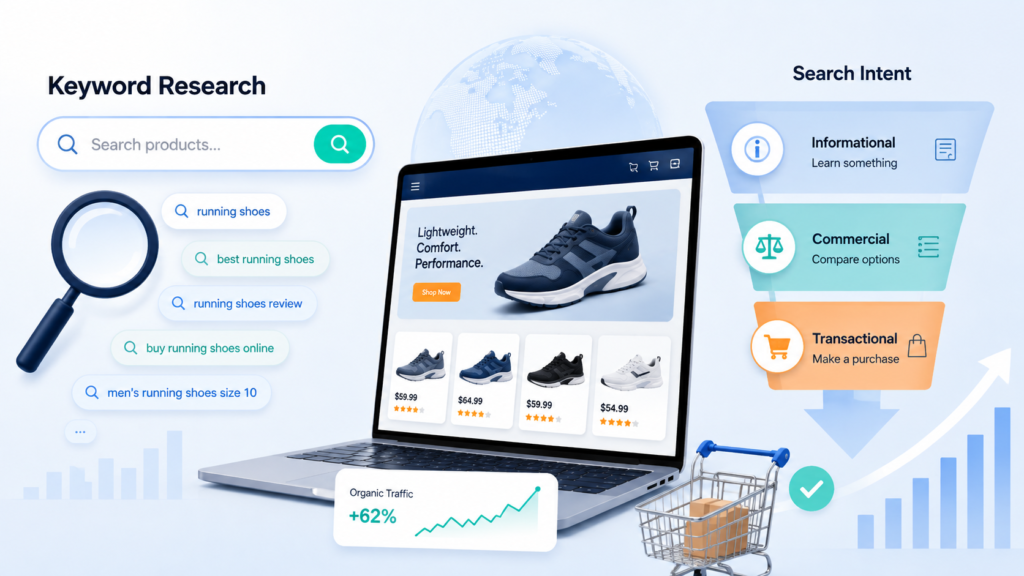
Keyword research is the foundation of ecommerce SEO.
Instead of targeting random keywords, focus on search intent.
Transactional Keywords
- buy wireless headphones online
- buy running shoes
- order skincare products
- best price gaming laptop
- women’s leather handbag online
Commercial Investigation Keywords
- best running shoes
- best laptops for students
- Shopify vs WooCommerce
- best skincare products for dry skin
- iPhone vs Samsung comparison
Product Specific Keywords
- black leather handbag
- men’s waterproof hiking boots
- wireless noise cancelling headphones
- organic vitamin C serum
Informational Keywords
- how to choose running shoes
- how to clean leather shoes
- what size laptop should I buy
- how does vitamin C serum work
Match keyword intent with page type:
- “running shoes” → category page
- “Nike Pegasus men’s running shoes” → product page
- “best running shoes for beginners” → blog guide
- “Nike vs Adidas comparison” → comparison article
2. Optimize E-commerce Category Pages
Category pages are highly important for ecommerce SEO.
A good category page should include:
- Title tag
- H1 heading
- Intro content
- Product listings
- Filters
- Subcategories
- Internal links
- Helpful descriptions
- Clear CTAs
Example:
Instead of “Shoes”, use:
👉 Men’s Running Shoes
Subcategories:
- Road Running Shoes
- Trail Running Shoes
- Waterproof Running Shoes
- Lightweight Running Shoes
Improve Product Page SEO
Product pages often drive the highest conversions.
Include:
- Unique product title
- Original description
- Features & benefits
- Specifications
- Sizes & colors
- High-quality images
- Price & availability
- Shipping & returns
- Reviews
- FAQs
- Related products
Avoid copying manufacturer descriptions.
Instead, explain:
- who the product is for
- why it is better
- how it solves a problem
Strengthen Technical E-commerce SEO
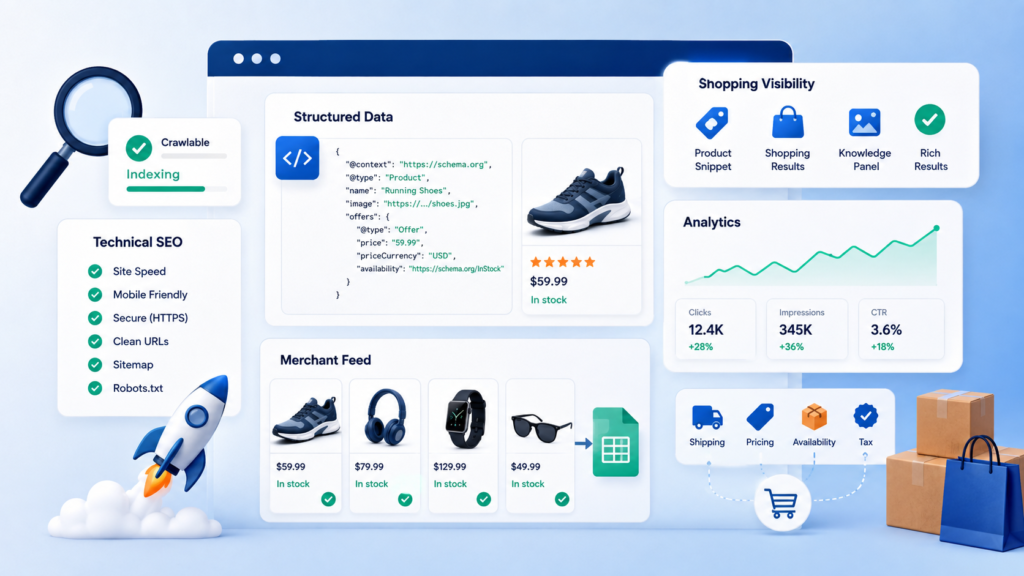
Ecommerce sites often generate many unnecessary URLs.
Common sources:
- Filters
- Sorting
- Variants
- Pagination
- Internal search
Key Technical Areas:
- Crawling & indexing
- Canonical tags
- XML sitemap
- Robots.txt
- Redirects
- Duplicate content
- Faceted navigation
- Mobile usability
- Site architecture
- Page speed
Google recommends clear URL structures for better understanding and indexing.
Improve Website Speed and Page Experience
Slow websites reduce conversions.
Improve:
- Image compression
- Lazy loading
- Caching
- JavaScript reduction
- Hosting quality
- Mobile performance
- Layout stability
Google Core Web Vitals are important for user experience and SEO performance.
Use Product Structured Data
Structured data helps search engines understand your products.
Important types:
- Product
- ProductGroup
- BreadcrumbList
- Organization
- Review
It can include:
- price
- availability
- brand
- ratings
- SKU
- images
Correct implementation improves eligibility for rich results.
Use Google Merchant Center
Google Merchant Center helps product visibility in search and shopping results.
Keep data consistent:
- titles
- prices
- images
- availability
- GTINs
- shipping details
Build a Strong Internal Linking Structure
Internal linking improves navigation and SEO.
Example structure:
Homepage → Category → Subcategory → Product
Internal Links (Your Website)
- Ecommerce SEO Services
- Shopify SEO Services
- WooCommerce SEO Services
- Technical SEO Services
- SEO Audit Services
Create Helpful E-commerce Content
Content helps attract customers at different stages.
Types:
- Buying guides
- Comparison posts
- Product care guides
- Size guides
- Gift guides
- Problem-solving articles
Example:
- How to Care for Leather Shoes
- How to Choose Running Shoes
- Best Laptop for Students
Optimize Product Images
Improve:
- file names
- alt text
- compression
- resolution
- responsiveness
Example:
❌ IMG1234.jpg
✅ mens-black-running-shoes.webp
Build Trust and EEAT Signals
Trust factors:
- About page
- Contact details
- Secure checkout
- Return policy
- Real reviews
- Expert content
- Transparent business info
Trust increases conversions significantly.
Optimize for Conversion, Not Just Rankings
Focus on:
- Add to cart visibility
- Pricing clarity
- Checkout flow
- Mobile UX
- Product recommendations
- Reviews
Metrics to track:
- Organic revenue
- Conversion rate
- Product page performance
- Category performance
SEO vs Paid Advertising
SEO
Long-term traffic growth
Paid Ads
Immediate traffic but ongoing cost
Best strategy: combine both.
Common E-commerce SEO Mistakes
- Duplicate content
- Thin category pages
- Poor internal linking
- Ignoring structured data
- No mobile optimization
- Wrong keyword targeting
- No conversion tracking
How Much Does E-commerce SEO Cost?
Depends on:
- number of products
- competition
- technical issues
- content needs
- market size
How to Maintain E-commerce SEO
Monthly tasks:
- Search Console review
- Ranking tracking
- Fix broken links
- Update content
- Monitor conversions
- Check indexing
When to Hire an SEO Expert
- traffic drop
- poor rankings
- large product catalog
- migration issues
- low conversions
Why Choose Us for E-commerce SEO?
We provide complete support through:
- SEO audits
- keyword research
- technical SEO
- content strategy
- internal linking
- structured data
- conversion optimization
👉 Explore: https://oyaminkabir.com/ecommerce-seo-services/
Start Increasing Your E-commerce Sales
A strong SEO strategy connects:
keywords → structure → content → technical SEO → internal links → conversions
👉 Get started here:
https://oyaminkabir.com/ecommerce-seo-services/
FAQs
1. What is ecommerce SEO?
Ecommerce SEO improves online store visibility in search engines.
2. Can SEO increase sales?
Yes, by bringing targeted buyers to your store.
3. How long does SEO take?
Usually 3–6 months for noticeable results.
4. What should be optimized first?
Category pages, product pages, and technical SEO.
5. Is product SEO important?
Yes, it directly impacts conversions.
6. Does Shopify need SEO?
Yes, all ecommerce platforms need SEO.
7. Best SEO strategy?
A mix of technical SEO, content, and conversion optimization.