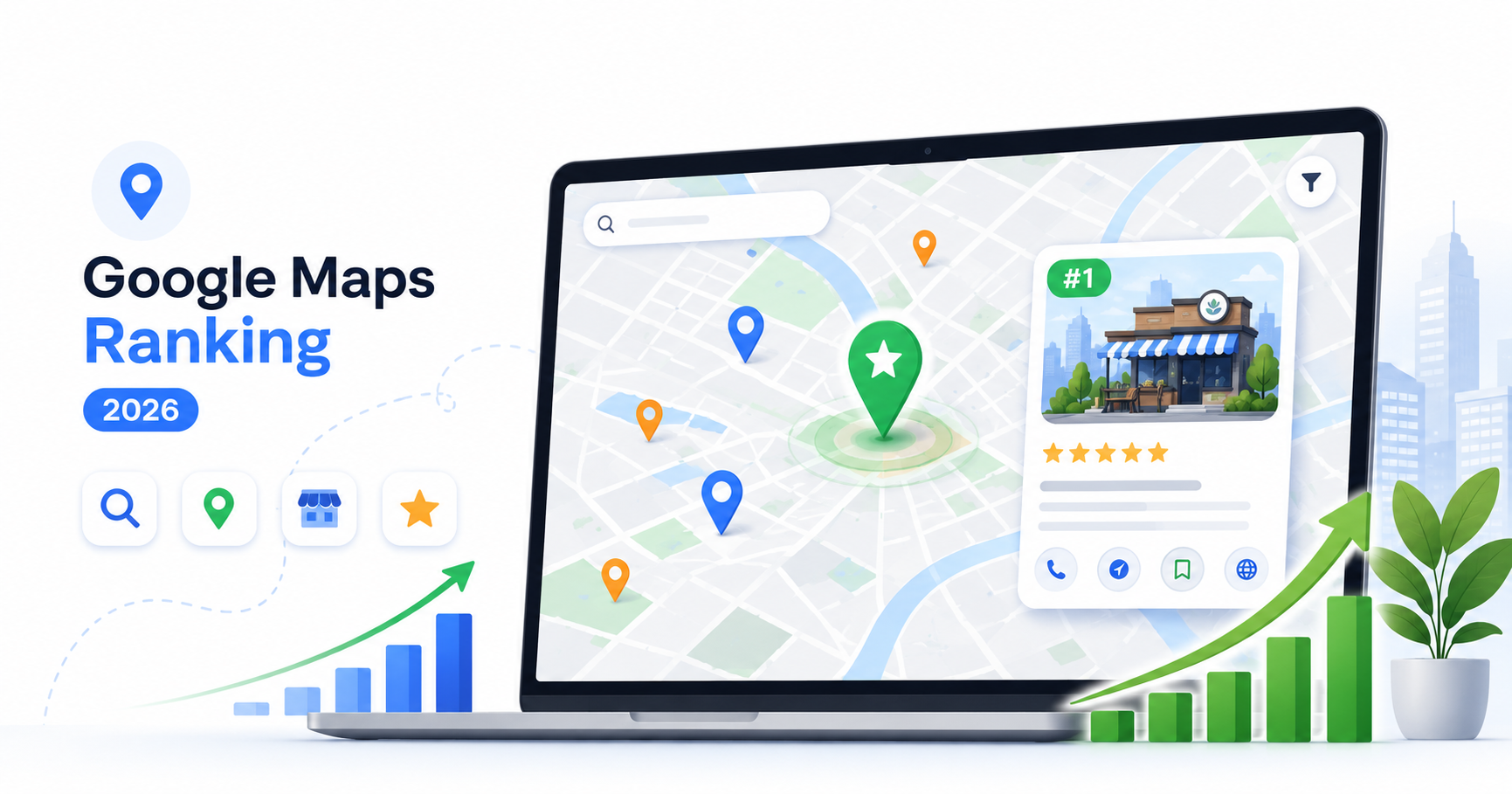
If your business depends on customers in a specific city or service area, ranking higher on Google Maps can put your company in front of people who are actively searching for what you offer.
Google says local search results are mainly determined by relevance, distance and prominence. That means there is no single trick that guarantees a top Google Maps position. Instead, businesses need accurate Google Business Profile information, strong local relevance, genuine reviews, a locally optimized website and credible signals from across the web.
This guide explains how to rank higher on Google Maps in 2026 using sustainable Local SEO strategies that help Google understand your business and help potential customers choose you.
If your business currently has poor local visibility, my Local SEO services can help identify and improve the factors limiting your performance.
How Does Google Maps Ranking Work in 2026?
Before trying to improve your Google Maps ranking, you need to understand what Google is trying to achieve.
Google wants to show local searchers businesses that are relevant to their query, geographically appropriate and established enough to be useful choices.
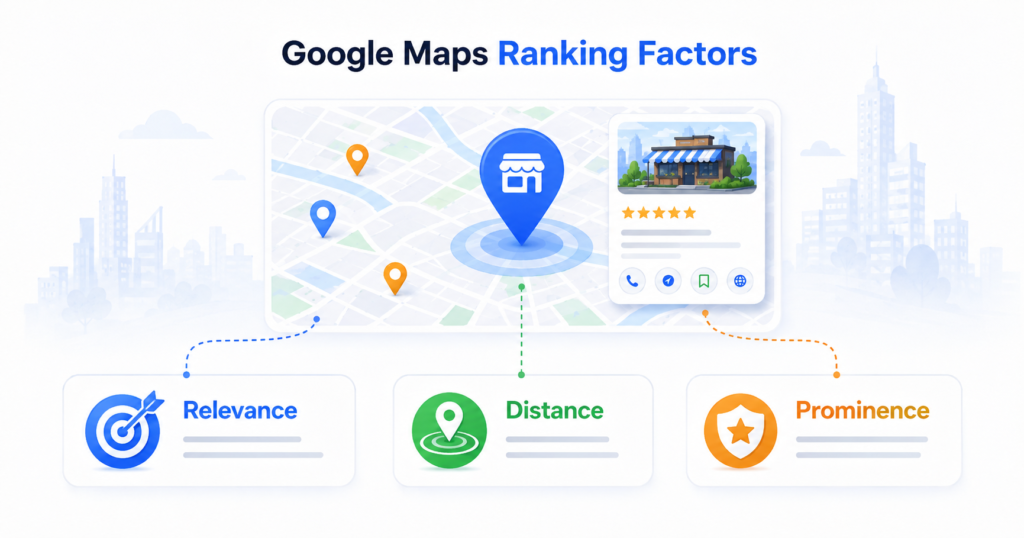
According to Google’s official local ranking guidance, local results are mainly based on three factors:
Relevance
Relevance measures how closely a business matches what someone is searching for.
For example, if someone searches for:
emergency plumber in Cork
Google needs enough information to determine which businesses genuinely offer emergency plumbing services.
Your business categories, services, website content and overall business information can help Google understand that relevance.
Distance
Distance considers how far each potential result is from the location used in the search.
If someone searches for:
dentist near me
Google considers the searcher’s location when selecting appropriate results.
Distance is one factor you cannot simply optimize away.
A business cannot realistically expect to dominate every geographic area simply by adding city names to its profile or website.
Prominence
Prominence reflects how well known or established a business appears.
Google can use information from across the web, including links, articles, directories and reviews, when assessing prominence.
This is why Google Maps SEO goes beyond your Google Business Profile.
Your website, reputation, backlinks, citations and wider online presence all matter.
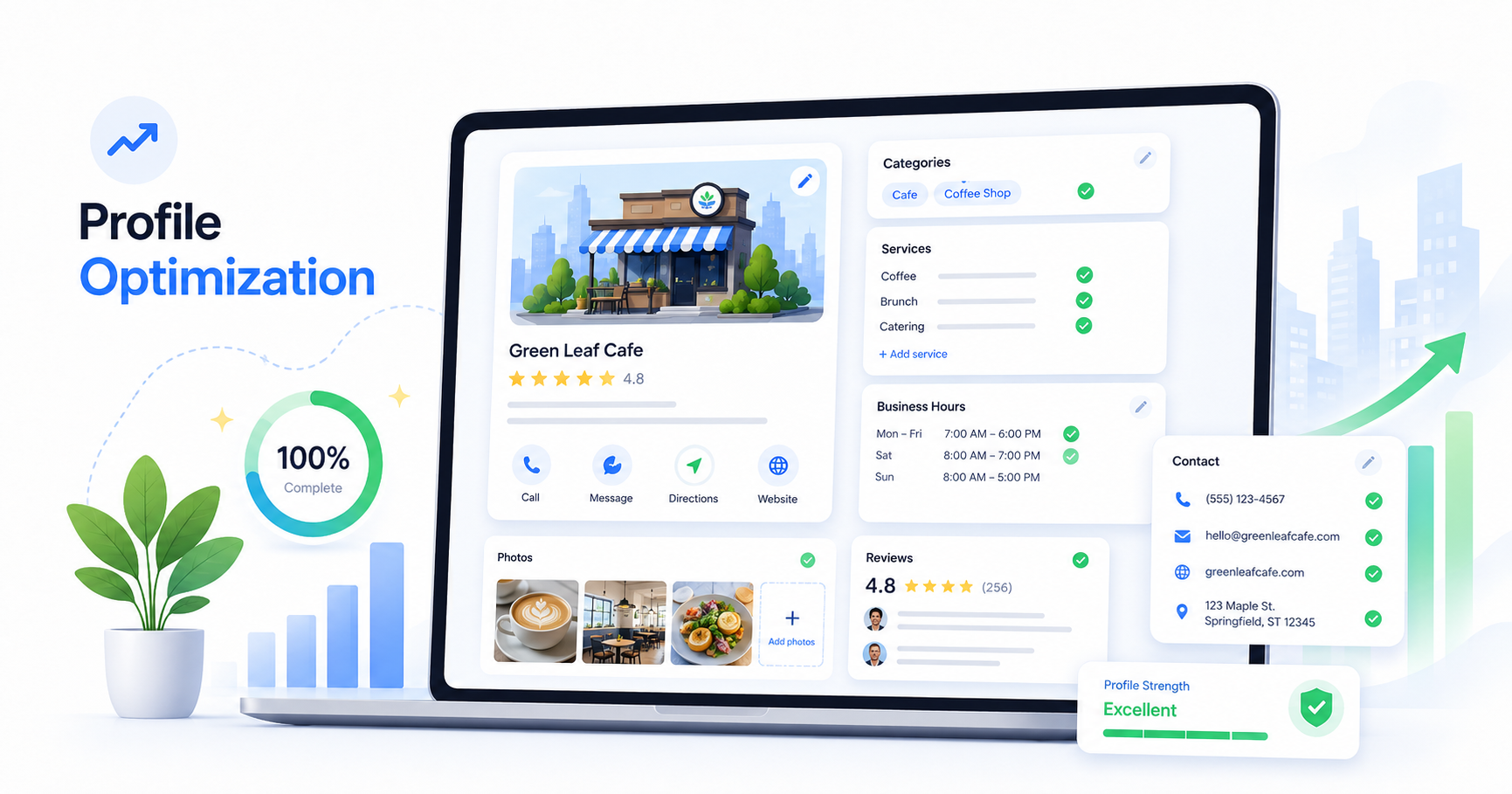
Complete Your Google Business Profile
One of the most important steps is also one of the simplest.
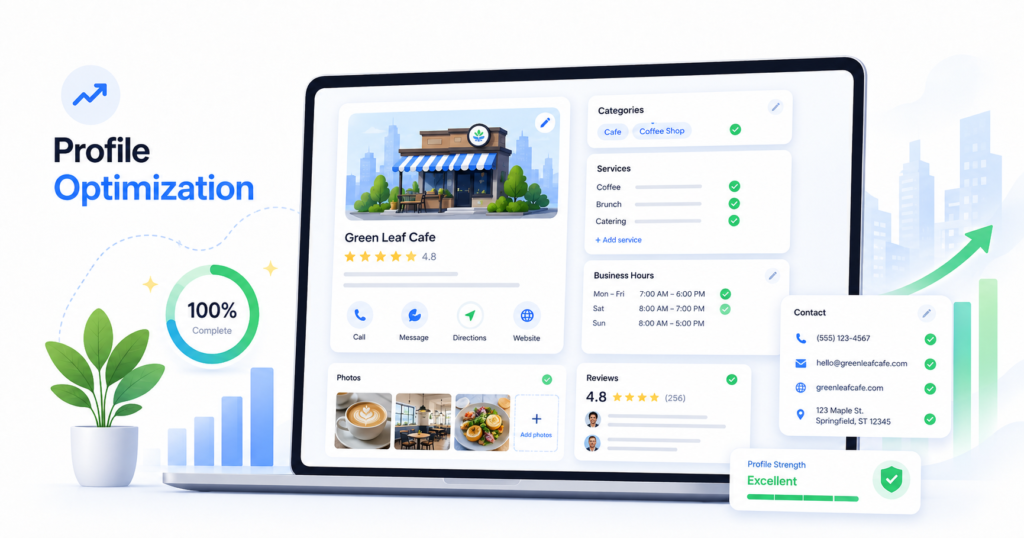
Make sure your Google Business Profile contains complete and accurate information.
Google explicitly recommends entering complete business information because businesses with accurate information are easier to match with relevant searches.
Review the following:
- Business name
- Primary category
- Secondary categories
- Address
- Service area
- Phone number
- Website
- Opening hours
- Special hours
- Business description
- Services
- Photos
- Videos
- Other applicable business attributes
Your profile should accurately represent the real business.
Do not add information simply because you think it might improve rankings.
The goal is to help Google and customers clearly understand:
Who you are + what you offer + where you operate
Verify Your Google Business Profile
A business should complete Google’s verification process when required.
Verification helps Google confirm that the business information is legitimate and that the person managing the profile is authorized to represent it.
However, verification by itself does not guarantee high rankings.
Think of verification as establishing eligibility and trust in the profile, not as a shortcut to the top of Google Maps.
After verification, continue optimizing the signals that affect relevance and prominence.
Choose the Most Accurate Primary Business Category
Your primary category is one of the clearest ways to explain what your business actually is.
For example:
A dental practice should choose an appropriate dental category.
A plumber should use a plumbing-related category.
An aesthetic clinic should select the category that best represents its primary business activity.
The primary category should describe the business itself rather than every individual service it offers.
What about secondary categories?
Secondary categories can be useful when the business legitimately operates across several closely related service areas.
For example, a clinic may provide several genuine categories of treatment.
The important word is genuine.
Do not add unrelated categories simply to appear for additional searches.
If you are unsure which search terms should be prioritized, professional keyword research can help connect real customer searches with appropriate website and Local SEO targeting.
Optimize Your Services Around Real Customer Searches
Potential customers frequently search for a specific service rather than a company name.
For example:
- boiler repair near me
- emergency dentist Cork
- laser hair removal Calgary
- family lawyer Dublin
- roof repair near me
- SEO consultant Cork
Your Google Business Profile should clearly communicate the services you genuinely provide.
Where relevant, add accurate service information to the profile.
Your website should then support those services with useful pages that explain them properly.
This creates a stronger relationship between:
Business → Service → Location → Search Intent
Do not turn service descriptions into blocks of repetitive keywords.
Write naturally for customers first.
Keep Your Business Name Accurate
One of the most damaging Local SEO mistakes is adding keywords or locations to a Google Business Profile name when they are not part of the real-world business name.
For example, if a business is genuinely called:
Oak Dental Clinic
do not rename the profile:
Oak Dental Clinic Best Dentist Emergency Dentist Dublin
just to target keywords.
Your profile should represent the business accurately.
Short-term manipulation is not a sustainable Local SEO strategy and can create unnecessary profile risk.
Keep Your Address, Phone Number and Hours Accurate
Google needs clear information about where your business operates and how customers can reach you.
Check your:
Business address
Use the legitimate business address applicable to the profile.
Phone number
Use a number that genuinely connects customers with that business or location.
Opening hours
Keep normal operating hours accurate.
Also update:
- holiday hours
- temporary closures
- special opening times
Incorrect hours create a poor customer experience and weaken confidence in your business information.
For multi-location companies, every branch should be reviewed separately.
Earn More Genuine Google Reviews
Reviews are one of the most visible trust signals on Google Maps.
Google states that review count and review score can contribute to local prominence.
But the objective should not simply be:
Get as many five-star reviews as possible.
The better strategy is to build a consistent process for asking genuine customers to share their actual experiences.
How to get more Google reviews ethically
You can:
- Ask satisfied customers after completing a service
- Share your Google review link
- Add a review request to follow-up emails
- Include a review link in appropriate customer communication
- Train staff to request feedback naturally
Never buy reviews.
Never offer discounts, gifts or other incentives in exchange for positive reviews.
Never create fake customer accounts.
Google’s review and Maps content policies prohibit fake and incentivized engagement.
Should You Respond to Google Reviews?
Yes.
Responding to reviews demonstrates that your business values customer feedback.
Reply professionally to both positive and negative reviews.
A useful response should sound human.
Avoid copying the same generic response hundreds of times.
For negative reviews:
- Stay professional.
- Avoid arguing publicly.
- Address legitimate concerns.
- Offer an appropriate way to continue the conversation.
- Report reviews only when they genuinely violate Google’s policies.
Reputation management supports both customer confidence and your broader local presence.
Add High-Quality Business Photos and Videos
Photos make a Google Business Profile more useful to potential customers.
Depending on the type of business, useful images might include:
- Business exterior
- Interior
- Team members
- Products
- Completed projects
- Treatment areas
- Facilities
- Equipment
- Food
- Rooms
- Office environment
Images should accurately represent the business.
Avoid relying entirely on stock photography.
Real photos help potential customers understand what to expect when they visit or contact you.
Google also recommends adding photos and videos to Business Profiles as part of maintaining useful local business information.
Build a Strong Local SEO Website
Your Google Business Profile should not operate separately from your website.
Google’s local ranking guidance makes clear that prominence can incorporate information Google knows about your business from across the web.
Your website should reinforce the same information contained in your Business Profile.
Important website elements include:
- Clear business name
- Address and contact information
- Service descriptions
- Location information
- Relevant title tags
- Helpful page headings
- Internal linking
- Local content
- Fast page performance
- Mobile usability
- Crawlable pages
- Clear site architecture
A strong website can support the relevance and authority surrounding your business.
If you are unsure whether technical or on-page issues are limiting performance, start with an SEO audit.
Create Strong Service Pages
Avoid forcing every service onto one generic page.
If a service is commercially important and deserves its own useful explanation, consider building a dedicated page.
For example, instead of only having:
Services
a dental clinic might have separate useful pages for:
- Dental implants
- Teeth whitening
- Emergency dentistry
- Invisalign
- Cosmetic dentistry
Each page should answer the questions a real customer may have.
Your service pages can explain:
What the service is
Who it is suitable for
What problems it solves
How the process works
Where the service is available
Frequently asked questions
How to book or enquire
This also gives Google clearer content to associate with relevant searches.
For help improving titles, headings, content targeting and internal links, see my On-Page SEO services.
Create Useful Location Pages
Location pages are especially important for businesses operating across multiple cities or physical branches.
Imagine a clinic operating in:
- Cork
- Dublin
- Galway
Rather than creating one weak page that repeatedly lists all three cities, the company may benefit from useful location-specific pages when each location genuinely serves customers there.
A strong location page can contain:
- Location name
- Address
- Phone number
- Opening hours
- Services available
- Directions
- Nearby landmarks
- Real location photos
- Location-specific staff information
- Customer FAQs
- Booking information
Avoid doorway-style location pages
Do not create hundreds of nearly identical pages where only the city name changes.
Each location page should provide genuine value.
Keep NAP Information Consistent
NAP means:
Name + Address + Phone Number
Your core business details should remain reasonably consistent across important websites and directories.
Examples may include:
- Your website
- Google Business Profile
- Industry directories
- Local directories
- Professional associations
- Social platforms
- Major business data platforms
Small formatting variations are normally less important than genuinely conflicting information.
For example:
01 Main Street
and
1 Main St
clearly describe the same address.
But completely different phone numbers, addresses or business names across major sources may create confusion for customers and search systems.
Build Relevant Local Citations
A local citation is an online mention of your business information.
Citations may appear in:
- Business directories
- Industry directories
- Chamber of commerce websites
- Professional associations
- Local organizations
- Local media websites
Focus on quality and relevance.
Listing your company on hundreds of low-quality directories is not automatically better than earning a smaller number of accurate, trusted citations.
Before building new citations, audit the important existing listings for incorrect or outdated information.
Earn Local Backlinks and Brand Mentions
Google explains that prominence can be influenced by information about a business found across the web, including links and articles.
That makes legitimate local authority building important.
Useful backlink opportunities can include:
- Local news coverage
- Industry publications
- Local sponsorships
- Professional associations
- Supplier relationships
- Community organizations
- Business partnerships
- Useful original research
- High-quality local resources
Avoid buying large quantities of low-quality links simply to manipulate rankings.
A good backlink should make sense even if Google did not exist.
If you want to strengthen the authority side of your Local SEO strategy, see my link building services.
Optimize Your Website for Local Keywords
Local keyword research helps identify how potential customers actually search.
Suppose you run an aesthetic clinic.
Possible searches could include:
aesthetic clinic Cork
skin clinic Cork
laser treatment Cork
aesthetic treatments near me
But you should not simply repeat those phrases throughout every paragraph.
Instead, place relevant terms naturally in useful locations such as:
- Page title
- H1
- Relevant H2 headings
- Main content
- Image alt text where appropriate
- Internal link anchor text
- Meta description
- Service pages
- Location pages
Google’s SEO Starter Guide recommends creating useful content and using clear, descriptive text that helps both users and search engines understand your pages.
Improve Your Internal Linking
Internal links connect relevant pages within your website.
They help users discover related information and help search engines understand how pages relate to each other.
For example:
A blog about Google Maps rankings can naturally link to:
- Local SEO services
- SEO audit services
- Keyword research services
- On-Page SEO services
- Technical SEO services
- SEO case studies
Use descriptive anchor text rather than repeatedly using generic phrases such as “click here.”
For example:
Good: Local SEO services for small businesses
Weak: Click here
Google recommends descriptive and relevant anchor text because it gives users and search engines better context about the destination page.
Make Sure Google Can Crawl and Index Your Website
Excellent Local SEO content cannot perform properly if Google struggles to access the website.
Technical issues to check include:
- Accidental noindex tags
- Robots.txt blocks
- Broken internal links
- Incorrect canonical tags
- Redirect problems
- Duplicate pages
- XML sitemap problems
- Server errors
- Slow pages
- Poor mobile usability
For larger or more complex sites, a technical SEO audit can identify problems that may prevent important local pages from being crawled and indexed correctly.
Add Appropriate LocalBusiness Structured Data
Structured data helps search engines understand specific information on a webpage.
Google supports LocalBusiness structured data for eligible local business information.
Depending on the business and page, structured data may communicate details such as:
- Business name
- Address
- Telephone
- Opening hours
- URL
- Geographic information
- Business type
Follow Google’s LocalBusiness structured data documentation rather than adding random schema properties simply because an SEO plugin offers them.
Schema is not a replacement for good content or a properly optimized Google Business Profile.
It is an additional way to communicate structured information clearly.
Strengthen Your Business Entity Across the Web
Local SEO increasingly requires consistency beyond one website or one profile.
Search engines should be able to understand that references across trusted sources relate to the same real business.
Maintain consistent information across your:
- Website
- Google Business Profile
- Social profiles
- Major directory listings
- Professional profiles
- Industry organizations
- Relevant third-party mentions
This is useful not only for traditional search.
Clear entity information can also make your business easier for modern search and AI systems to interpret.
The objective is not to manufacture hundreds of mentions.
It is to build a credible and consistent digital footprint.
Do Not Ignore Traditional Organic SEO
Google Maps SEO and website SEO are closely connected.
Google explicitly notes that a business’s position in web results can contribute to local prominence, so standard SEO best practices still matter.
This means you should continue improving:
- Content quality
- Keyword targeting
- Website authority
- Backlinks
- Internal links
- Crawlability
- Technical performance
- Service pages
- Location pages
A strong Google Business Profile attached to a poor-quality website leaves opportunities on the table.
Likewise, a strong website with a neglected Google Business Profile can struggle to maximize local visibility.
The strongest strategy connects the two.
Track Google Maps Rankings by Location
Do not judge Local SEO performance by manually searching your business name once.
Google Maps results can vary based on search location.
Someone searching from one side of a city may see different results from someone several kilometres away.
Track important non-branded queries such as:
- service + city
- service + area
- service near me
- category + location
Measure changes over time rather than reacting to one search.
Your reporting can include:
- Local keyword positions
- Google Maps visibility
- Search impressions
- Website clicks
- Calls
- Direction requests
- Leads
- Form submissions
- Appointment requests
- Revenue where tracking allows it
Rankings are useful, but qualified enquiries and revenue are stronger business outcomes.
Use Google Business Profile Performance Data
Your Google Business Profile provides performance information that can help you understand how people interact with the listing.
Use the available information alongside website analytics and keyword tracking.
Look for patterns.
For example:
Are more people discovering the business?
Which search queries are relevant?
Are website visits increasing?
Are calls or enquiries improving?
Which locations are struggling?
Which services attract high-intent searches?
Use data to decide what needs improvement next instead of optimizing randomly.
Study the Businesses Already Ranking Above You
Local competitor analysis can reveal gaps in your strategy.
Search your priority queries and evaluate the businesses that consistently appear above you.
Review areas such as:
Google Business Profile
- Categories
- Reviews
- Photos
- Services
- Profile completeness
Website
- Service pages
- Location pages
- Content depth
- Internal linking
- Local relevance
- User experience
Authority
- Backlinks
- Local citations
- Brand mentions
- Industry coverage
Do not simply copy competitors.
Use competitor research to understand what the local search landscape rewards and where you can build something more useful.
Avoid Google Maps SEO Tactics That Can Backfire
Some Local SEO tactics may appear attractive because they promise fast results.
They can also create unnecessary risk.
Avoid:
Keyword stuffing the business name
Use the legitimate business name.
Fake locations
Do not create locations where the business does not genuinely operate.
Buying Google reviews
Google prohibits fake and incentivized reviews.
Creating fake customer accounts
Reviews should reflect real customer experiences.
Copying competitor content
Create original pages based on your actual services and expertise.
Creating hundreds of thin city pages
Location pages should provide genuine local value.
Buying spammy citation packages
Quality and accuracy are more important than raw directory quantity.
Building low-quality backlinks in bulk
Focus on relevant, credible authority.
Sustainable Local SEO should make the business more trustworthy, understandable and useful, not simply manipulate a ranking signal.
Improve Conversion Rate, Not Just Rankings
Getting to the top of Google Maps has limited value if searchers do not trust your business.
Once customers discover your listing, they may compare:
- Review rating
- Review quality
- Photos
- Services
- Business hours
- Location
- Website
- Brand presentation
- Responsiveness
- Pricing information where relevant
- Booking options
Treat your Google Business Profile as both an SEO asset and a customer acquisition asset.
Ask:
If I were a new customer comparing three local businesses, would I choose this profile?
That question often reveals opportunities that ranking tools do not.
How Long Does It Take to Rank Higher on Google Maps?
There is no universal timeline.
Local ranking improvements depend on factors such as:
- Competition
- Search location
- Existing authority
- Business category
- Website quality
- Review profile
- Business history
- Local relevance
- Backlinks
- Citation quality
- Technical SEO
- Strength of competitors
Some improvements may appear relatively quickly after important errors are corrected.
More competitive markets usually require sustained work.
Be cautious of anyone guaranteeing:
#1 Google Maps ranking in 7 days
Google itself states that there is no way to request or pay for a better local ranking.
A sustainable strategy focuses on improving the business signals you can legitimately control.
Google Maps SEO Checklist for 2026
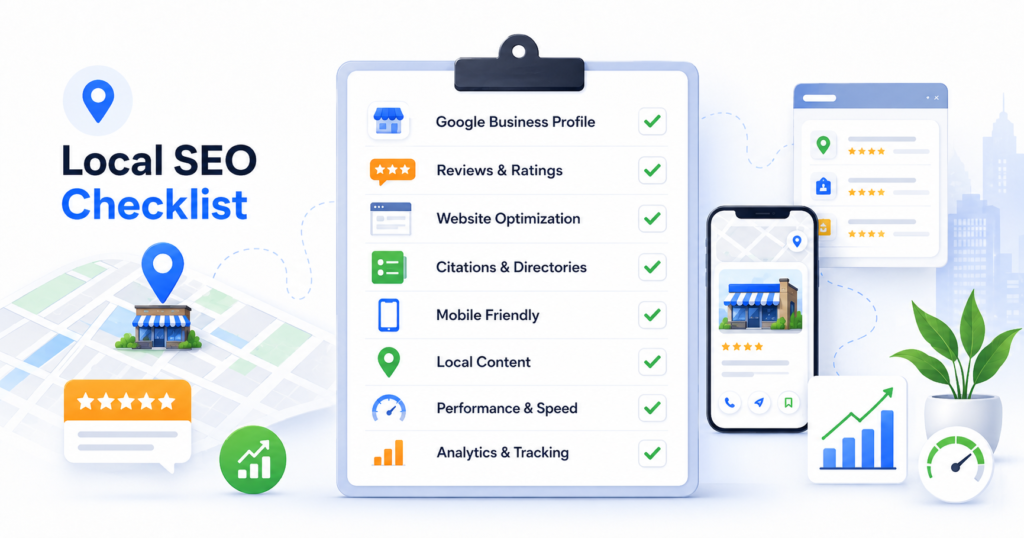
Use this checklist when reviewing your local search presence:
Google Business Profile
☐ Profile verified where required
☐ Business name accurate
☐ Correct primary category
☐ Relevant secondary categories
☐ Accurate address
☐ Accurate service area
☐ Correct phone number
☐ Correct website URL
☐ Opening hours updated
☐ Services completed
☐ Business information accurate
☐ Real photos added
☐ Reviews monitored
☐ Review responses managed
Website Local SEO
☐ Local keyword research completed
☐ Service pages optimized
☐ Useful location pages created
☐ Titles and headings optimized
☐ NAP information accurate
☐ Internal links improved
☐ Website mobile-friendly
☐ Important pages indexable
☐ Technical SEO issues fixed
☐ Appropriate structured data added
Authority
☐ Major citations accurate
☐ Industry listings reviewed
☐ Local backlinks earned
☐ Relevant brand mentions developed
☐ Review acquisition process established
Measurement
☐ Local rankings tracked
☐ GBP performance monitored
☐ Website conversions measured
☐ Calls and enquiries monitored
☐ Competitors reviewed regularly
Frequently Asked Questions About Google Maps Ranking
How do I rank higher on Google Maps?
To improve your Google Maps visibility, focus on accurate and complete Google Business Profile information, appropriate categories, genuine customer reviews, useful photos, locally relevant website content, accurate citations, authoritative links and strong overall Local SEO.
Google primarily evaluates local results using relevance, distance and prominence.
What are the main Google Maps ranking factors?
Google identifies three main local ranking concepts:
Relevance: How closely the business matches the search.
Distance: How far the business is from the relevant search location.
Prominence: How established or well known the business appears.
Businesses can improve many relevance and prominence signals, while geographic distance is inherently limited by the business and searcher’s actual locations.
Do Google reviews help Google Maps rankings?
Google states that review count and review score can factor into local search ranking.
Reviews also influence customer trust and conversion decisions.
Focus on earning genuine reviews from real customers rather than buying or incentivizing them.
Can I pay Google to rank higher on Google Maps?
No.
Google states that there is no way to request or pay for a better local ranking.
Google Ads can provide paid visibility, but advertising does not purchase a higher organic Google Maps ranking.
Does my website affect Google Maps rankings?
Yes, your website can support local visibility.
Google explains that prominence incorporates information it knows about a business from across the web and that organic search position is also a factor.
A locally relevant, technically sound and authoritative website therefore supports the wider Local SEO strategy.
Does adding keywords to my Google Business Profile name improve rankings?
Your Business Profile should use your genuine real-world business name.
Adding unrelated keywords or locations solely for SEO is not a sustainable optimization strategy and may violate Google’s representation requirements.
How many Google reviews do I need to rank?
There is no universal number.
The competitive benchmark depends on your industry, location and competitors.
Focus on consistently earning genuine customer feedback rather than chasing an arbitrary review count.
Are Google Business Profile posts a ranking factor?
Google Business Profile posts can be useful for communicating updates, offers, events or other information to customers.
However, businesses should not assume that publishing posts alone automatically increases Google Maps rankings.
Use posts primarily to improve customer communication and profile usefulness.
Do citations still matter for Local SEO?
Accurate citations can support a consistent business presence across trusted websites and directories.
Focus on relevant and authoritative listings rather than mass-submitting your business to hundreds of low-quality directories.
Can a service-area business rank in multiple cities?
A service-area business may appear for searches across areas it genuinely serves, but rankings still depend partly on geographic relevance and distance.
Simply adding dozens of city names to a profile or website does not guarantee rankings in those locations.
August 11, 2026
Final Thoughts: How to Rank Higher on Google Maps in 2026
Ranking higher on Google Maps is not about finding one hidden ranking trick.
The strongest Local SEO strategy combines several elements:
Accurate Google Business Profile
Strong service relevance
Genuine customer reviews
Useful local website content
Accurate business citations
Relevant backlinks and brand mentions
Technical SEO
Consistent measurement
Google’s core local ranking framework remains centered on relevance, distance and prominence.
You cannot control every factor, especially a searcher’s physical distance from your business.
But you can make your business easier for Google to understand, strengthen your online prominence and provide a better experience for potential customers.
That is the foundation of sustainable Google Maps SEO.
See a Real Google Business Profile Optimization Example
Want to see how Local SEO translates into measurable search visibility?
Read my Google Business Profile Optimization Case Study to see how Aesthetic Clinic Group improved its local search presence and moved target keywords into Google’s top 3 positions.
Need Help Ranking Higher on Google Maps?
If your business is not appearing where potential customers are searching, I can help identify what is limiting your local visibility.
My Local SEO work can include:
- Google Business Profile audit
- GBP optimization
- Local keyword research
- Google Maps competitor analysis
- Website Local SEO
- Location-page optimization
- Citation analysis
- Review strategy
- Local ranking analysis
- Technical SEO review
Explore my Local SEO services or contact Oyamin Kabir to discuss your business.
Oyamin Kabir
Local SEO & Google Business Profile Specialist